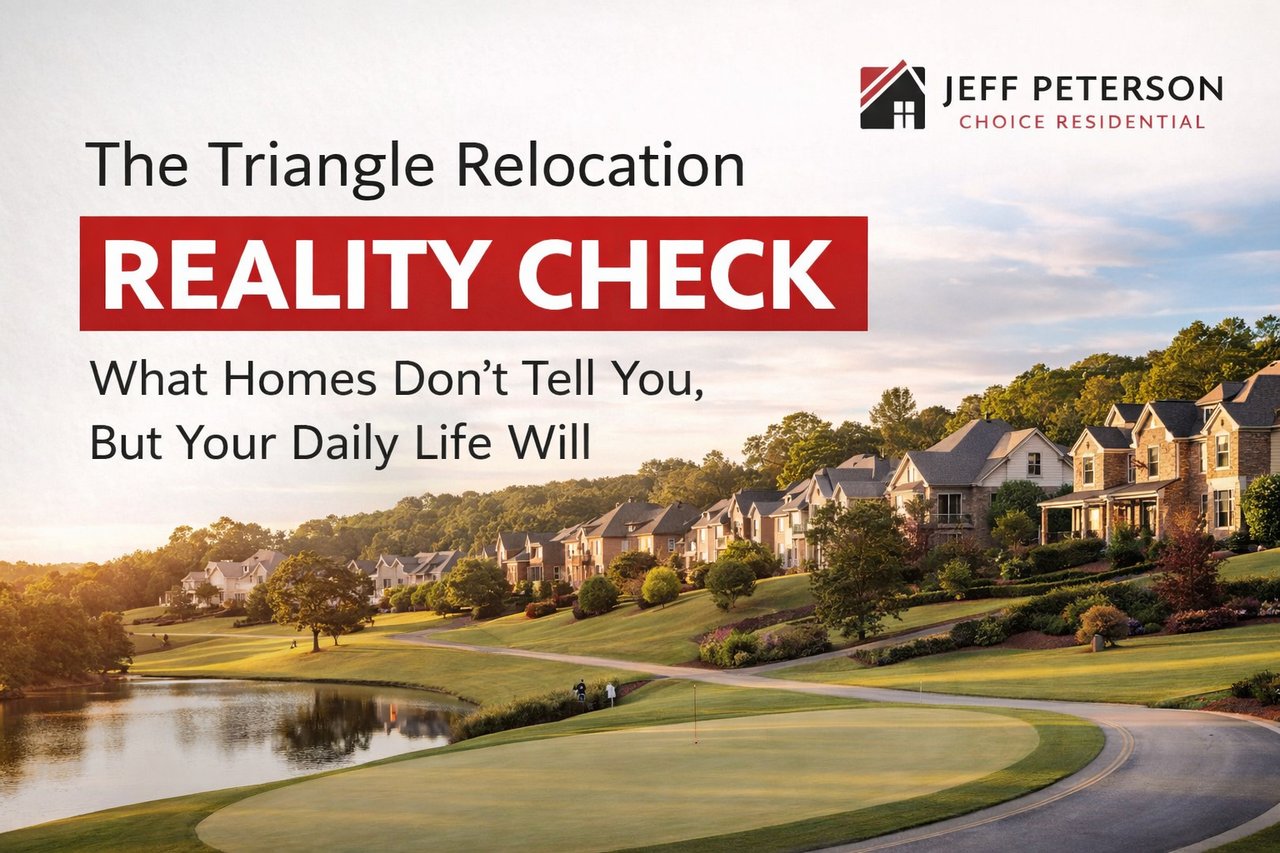
Relocating to the Triangle: A Real-Life Lifestyle Check
- Jeff Peterson
- February 3, 2026
Relocating to the Triangle often starts with a list of homes, neighborhoods, and price ranges. But for most buyers, especially those moving from out of state, the real adjustment doesn’t come from the house. It comes from how life actually feels once you wake up in a new place.
Raleigh and the surrounding communities offer something unique. Growth, green space, and a slower pace of life compared to many major metro areas. But those same qualities can feel very different depending on where you land.
This is the part of relocation most listing descriptions don’t talk about.
Two communities can be ten minutes apart and feel like entirely different worlds.
Some areas revolve around:
Early morning tee times and neighborhood meetups
Evening walks and quiet streets
Built-in social calendars through clubs and community events
Others feel more like traditional suburbs with school schedules, commuting patterns, and busy weekends centered around sports and errands.
Understanding this difference early can shape whether your new home feels like a retreat or just another place to sleep.
Many buyers are drawn to golf and active adult communities for the lifestyle, not just the amenities.
What often surprises people is how much social structure is built into these neighborhoods. Events, clubs, casual gatherings, and shared spaces make it easier to meet people organically. For buyers relocating from out of state, this can be a major factor in how quickly they feel “at home.”
But not all communities offer the same level of connection, privacy, or activity. Some are lively. Others are intentionally quiet. Knowing which one fits your personality matters more than the course itself.
Commute time isn’t just about minutes on a map. It’s about how often you cross major corridors, where errands actually happen, and whether your daily routines feel simple or fragmented.
Some areas offer easy access to shopping, healthcare, and dining within a few minutes. Others trade convenience for space and quiet.
Neither is wrong. But they create very different day-to-day experiences.
One of the biggest challenges for out-of-state buyers isn’t the move. It’s building a sense of belonging afterward.
Community design plays a major role in this. Walkability, shared spaces, clubs, and neighborhood events can make the difference between feeling connected in six months or still feeling like an outsider a year later.
This is especially important for retirees and downsizers who are often rebuilding their social circles in a new state.
The most successful relocations I see are the ones that start with questions like:
How do I want my weeks to feel, not just my weekends?
Do I want activity around me or space from it?
How important is built-in community versus privacy?
Once those answers are clear, the right neighborhoods usually reveal themselves.
Relocating to Raleigh works best when it’s treated as a lifestyle decision first and a real estate transaction second.
Homes change. Communities shape your daily life.
Taking the time to understand how different areas function, connect, and feel can turn a move into a true upgrade instead of just a change of address.